A History of Ancient and Early Medieval India: From the Stone Age to the 12th Century by Upinder Singh
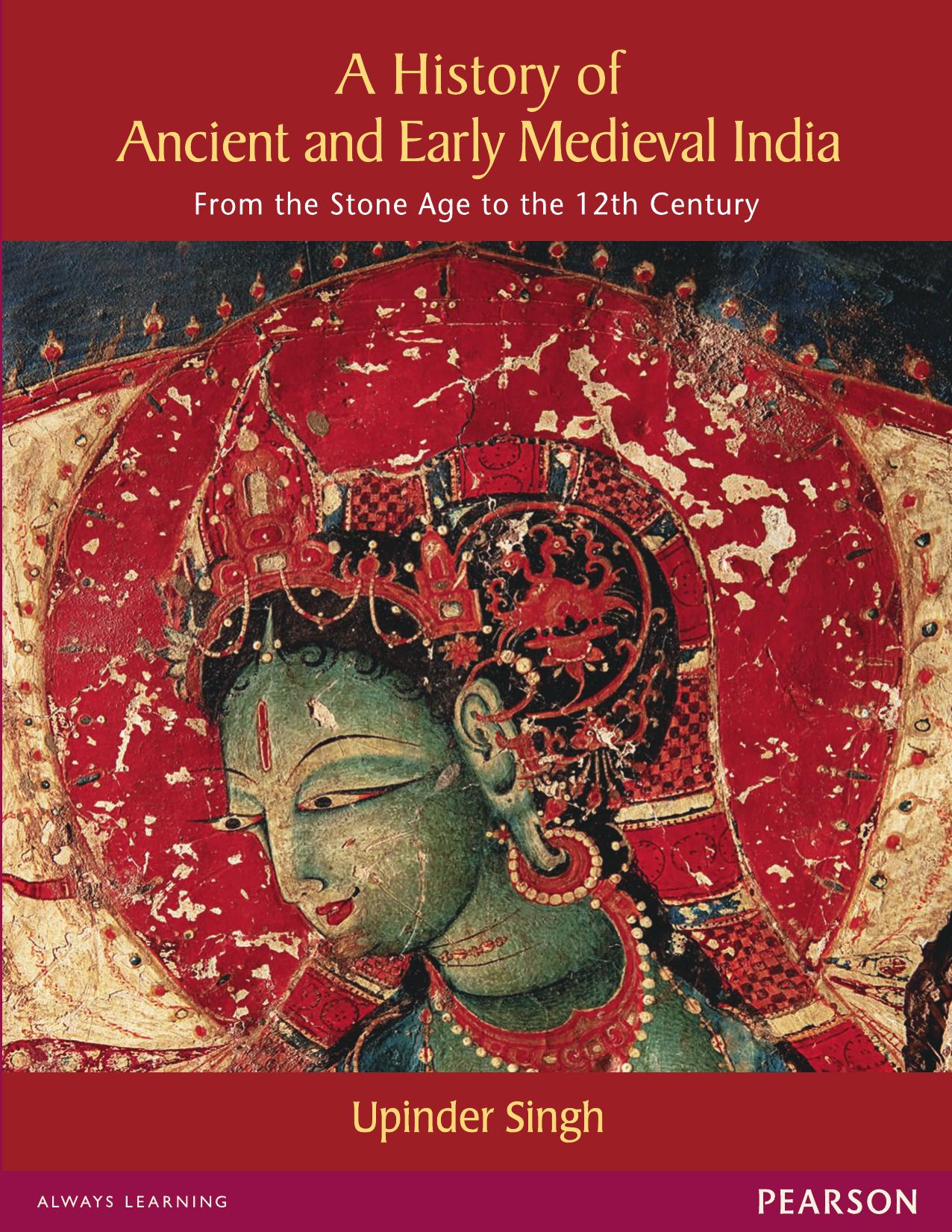
Author:Upinder Singh [Singh, Upinder]
Language: eng
Format: epub, pdf
ISBN: 9788131711200
Publisher: Pearson India
Published: 2009-12-13T18:30:00+00:00
The Nature and Structure of the Maurya Empire
The problems posed by the major sources for the Maurya period have implications for our understanding of the nature and structure of the empire. There is the Arthashastra, a theoretical treatise, not composed in its entirety in the Maurya period, which talks of a potential state within the framework of an established tradition of scholarship on statecraft. Just how much of what it says can be connected to the manner in which the Maurya empire was governed is difficult to assess. Second, there are different versions of fragments of a lost text, Megasthenes’ Indica, replete with several discrepancies and inaccuracies. The third major source, Ashoka’s inscriptions, have the advantage that they are securely dated to the reign of Ashoka, but as they mostly deal with Ashoka’s dhamma, they offer only fleeting, incidental references to administration. The political implications of the numismatic finds and the archaeological evidence have not yet been properly explored.
The question is not whether the Maurya state was an empire or not, but what sort of empire was it? What did it mean for a territory or people to be absorbed into its fold? What were the strategies and degrees of control over different areas? How effective was this control? The three major sources for the Maurya period may actually mask the ground realities. All of them were, in one way or another, connected with the Maurya court. They project the point of view of the political–intellectual elites at the centre and perhaps exaggerate the level of central control.
The idea of a highly centralized Maurya empire was based partly on an assumption that empires and centralization go together. It was also based on an uncritical reading of the Arthashastra, which presents a state that controls the people, produce, and resources of its domain with all-encompassing and robotic precision. More recent writings on the Maurya state have gone to the other extreme. Gerard Fussman (1987–88) has argued that given the extent of the empire and the communication networks of the time, the Maurya empire could not possibly have been centralized. Maurya rule was superimposed over a number of existing political units, which must have been allowed to continue to exercise varying degrees of autonomy. Ashoka’s personal supervision applied only to the propagation of dhamma, not to details of routine administration. Initiatives at the provincial and local administrative level are evident in the script, language, content, and location of the inscriptions. For instance, the fact that the Greek and Aramaic inscriptions in the northwest are not literal translations of the standard edicts suggests that considerable initiative was left in the hands of local officials.
Romila Thapar ([1963], 1987) initially presented the Maurya empire as a new form of government marked by centralized control and planning. Her subsequent re-consideration of the issue (1984) suggests that the Maurya empire was not a homogeneous whole, and that it subsumed different sorts of economies, polities, and life-ways. Using the framework of world systems theory, Thapar suggests that the empire should be considered as consisting of metropolitan, core, and peripheral areas.
Download
A History of Ancient and Early Medieval India: From the Stone Age to the 12th Century by Upinder Singh.pdf
This site does not store any files on its server. We only index and link to content provided by other sites. Please contact the content providers to delete copyright contents if any and email us, we'll remove relevant links or contents immediately.
Personalized inhaled bacteriophage therapy for treatment of multidrug-resistant Pseudomonas aeruginosa in cystic fibrosis by unknow(175169)
CONSORT 2025 statement: updated guideline for reporting randomized trials by unknow(83564)
Critical evaluation of the ProfiLER-02 study design and outcomes by Vivek Subbiah & Razelle Kurzrock(83256)
Cardiac gene therapy makes a comeback by Oliver J. Müller & Susanne Hille & Anca Kliesow Remes(83116)
Whisky: Malt Whiskies of Scotland (Collins Little Books) by dominic roskrow(74436)
Unveiling the design rules for tunable emission in graphene quantum dots: A high-throughput TDDFT and machine learning perspective by Şener Özönder & Mustafa Coşkun Özdemir & Caner Ünlü(50892)
A yeast-based oral therapeutic delivers immune checkpoint inhibitors to reduce intestinal tumor burden by unknow(40259)
Covalent hitchhikers guide proteins to the nucleus by Alexander F. Russell & Madeline F. Currie & Champak Chatterjee(40215)
Meet the Authors: Christopher R. Mansfield and Emily R. Derbyshire by Christopher R. Mansfield & Emily R. Derbyshire(40094)
Alkaline-earth metals promote propane dehydrogenation with carbon dioxide through geometric effects: Altering the reaction pathway by unknow(32730)
Induced iron vacancies boosting FeOOH loaded on sustainable Fenton-like collagen fiber membrane for efficient removal of emerging contaminants by unknow(32504)
Efficient electric-field-assisted photochemical conversion of methane to n-propanol exclusively over penetrated TiO2Ti hollow fibers by Guanghui Feng(32452)
Bi2SiO5 nanosheets as piezo-photocatalyst for efficient degradation of 2,4-Dichlorophenol by Hangyu Shi & Yifu Li & Lishan Zhang & Guoguan Liu & Qian Zhang & Xuan Ru & Shan Zhong(32384)
A novel NDIPTA organic heterojunction photocatalyst with built-in electric field for efficient hydrogen production by Jiahui Yang & Baojun Ma & Yongfa Zhu(32360)
Enhanced conversion of methane to liquid-phase oxygenates via hollow ferrite nanotube@horseradish peroxidase based photoenzymatic catalysis by Jun Duan & Shiying Fan & Xinyong Li & Shaomin Liu(32331)
Ordered macroporous superstructure of defective carbon adorned with tiny cobalt sulfide for selective electrocatalytic hydrogenation of cinnamaldehyde by Xiao-Shi Yuan & Sheng-Hua Zhou & San-Mei Wang & Wenbo Wei & Xiaofang Li & Xin-Tao Wu & Qi-Long Zhu(32256)
What's Done in Darkness by Kayla Perrin(27145)
Topological analysis of non-conjugated ethylene oxide cored dendrimers decorated with tetraphenylethylene: Insights from degree-based descriptors using the polynomial approach by A Theertha Nair & D Antony Xavier & Annmaria Baby & S Akhila(26522)
Investigation of mechanical and self-healing properties of hydroxyl-terminated polybutadiene functionalized with 2-ureido-4-pyrimidinone by Mohsen Kazazi & Mehran Hayaty & Ali Mousaviazar(26457)
